Let’s talk about the future of building in Ethiopia. If you’re a contractor, developer, or just watching the remarkable construction boom across the country, you’ve probably noticed a particular piece of kit gaining traction: the self-loading concrete mixer. It’s a clever machine—part loader, part mixer, all-in-one solution for sites where traditional ready-mix trucks can’t reach or don’t make economic sense. But as we look ahead to 2026, a big question looms for anyone thinking of investing: what’s going to happen to the concrete mixer price in Ethiopia? Forecasting isn’t about gazing into a crystal ball; it’s about connecting the dots between government policy, global trade, and local hustle. The trajectory of prices in 2026 won’t be a straight line; it’ll be the result of a fascinating tug-of-war between exciting demand and complex supply chains.
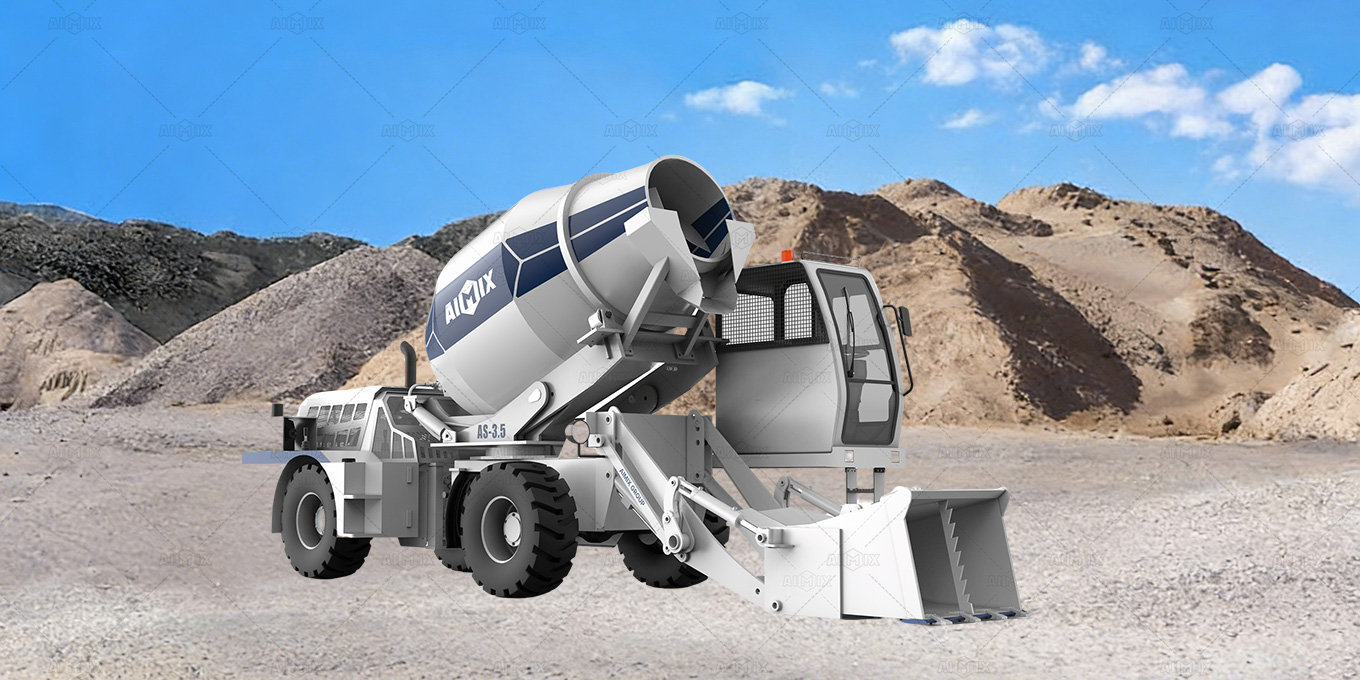
The Demand Engine: Why Everyone Will Want One
First, let’s understand the forces that will make these machines highly sought-after, which naturally supports firmer pricing. Ethiopia’s build environment is unique, and the self-loader fits it like a glove.
Government Push and Infrastructure Ambition
The federal and regional governments are deeply invested in a massive infrastructure agenda. We’re not just talking about grand projects in Addis Ababa. The real action for self-loaders will be in secondary cities, rural road projects, and regional water or irrigation schemes. These are often in areas with logistical pinch points—poor access roads, limited hardstand for trucks, or just sheer distance from a commercial concrete batch plant for sale. A government contractor tasked with building 50 small bridges along a new corridor won’t rely on volatile trucked concrete. They’ll want the autonomy and site-specific production a self-loader provides. This public-sector demand creates a stable, high-volume baseline for the market.
The Private Sector’s Calculus of Control
Meanwhile, private developers and building contractors are doing their own math. The economics of small to medium pours in urban infill sites or private housing developments are challenging with traditional methods. Minimum load charges from ready-mix plants eat into margins, and coordinating deliveries in congested areas is a scheduling nightmare. The self-loader shifts this calculus. It gives a contractor direct control over timing, mix, and cost for projects like villa compounds, small commercial blocks, or factory floors. As more businesses realize this machine turns a concrete supply from a variable, outsourced cost into a managed, in-house process, demand will surge. This isn’t just buying a tool; it’s buying strategic independence.
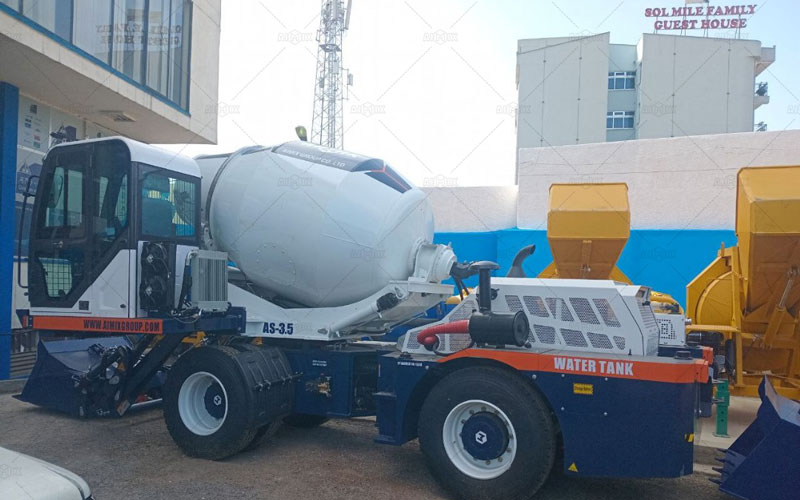
The Supply Side Squeeze: What Could Push Prices Up
On the other side of the equation, several factors could exert upward pressure on the sticker price you’ll see at a dealer’s lot in 2026.
The Global Cost Carousel
These machines are global products. Even if local assembly ramps up, core components like engines, hydraulics, and high-grade steel come from international markets. The price of self loading concrete mixer is notoriously volatile. A spike in global steel prices or a prolonged increase in container shipping costs will inevitably ripple through to the final cost. Furthermore, emission regulations in manufacturing countries (like China’s evolving standards) may force producers to use more expensive, cleaner engines, adding a cost layer that gets exported.
The Currency and Import Equation
The Ethiopian Birr’s exchange rate against the US Dollar, Euro, and Chinese Yuan is perhaps the single biggest wildcard. A significant depreciation would make all imported machinery—or the components for local assembly—instantly more expensive in Birr terms. While the government has strategies to boost domestic manufacturing, achieving the scale and vertical integration needed to be truly price-insulating from forex fluctuations by 2026 is a tall order. Importers will hedge their risks, and those costs will be factored into their pricing models.
The 2026 Price Landscape: A Realistic Breakdown
So, where does this push-and-pull leave us? It’s unlikely we’ll see one price. Instead, the market will segment based on capability, brand, and support.
The Three-Tier Market Structure
We can expect a clear stratification. At the entry-level, you’ll find basic, lower-horsepower models, possibly from newer brands or with simpler features. Think of this as the “get-the-job-done” tier, with prices potentially ranging from **ETB 2.5 million to ETB 3.8 million**. The mid-market will be the fiercest battleground. This will include reliable, brand-name workhorses with good parts availability, suitable for a dedicated contracting business. Prices here could sit between **ETB 4 million and ETB 5.5 million**. At the top end, premium models with higher capacity, advanced features, and gold-plated service contracts from major international brands could command prices from **ETB 6 million and upwards**.
The Real Price: Financing and Total Cost of Ownership
Here’s the crucial part for any smart buyer in 2026: the sticker price is only the opening bid. The real determinant of affordability and value will be the financial packaging. Will local banks offer attractive equipment financing with reasonable down payments? Will manufacturers or their dealers introduce lease-to-own schemes? The monthly payment will matter more than the total price for most buyers. Furthermore, the total cost of ownership will dominate conversations. A cheaper machine with no local service network and expensive, hard-to-find parts is a false economy. The “price” in 2026 will increasingly be seen as a package: the concrete mixer machine‘s cost, plus the cost and availability of financing, plus the security of a local service hub with trained technicians and a parts inventory. The most successful sellers won’t just offer a product; they’ll offer a predictable, manageable monthly operational expense. That’s the future of this market.
In essence, the story for 2026 is one of growing sophistication. Prices will reflect not just metal and motors, but value, reliability, and financial ingenuity. For the Ethiopian contractor, the decision will move beyond “how much does it cost?” to “what is the cost of running it, and how does it build my business?” That’s a sign of a maturing, dynamic market where smart investment can truly pay off.