In the dynamic and geographically diverse landscape of Latin American mining and construction, project speed is a critical competitive advantage. Traditional fixed-plant installations often face prolonged commissioning cycles due to complex civil works, unpredictable on-site assembly, and logistical hurdles. A transformative shift is underway, driven by the adoption of modular structures for mobile crushing systems. This approach, centered on pre-engineered, plug-and-play modules, is dramatically accelerating project timelines for portable stone crusher(trituradora de piedra portatil) and aggregate crusher plant deployments, from the remote Andes to sprawling Brazilian infrastructure sites.
The Commissioning Bottleneck in Traditional Mobile Setups
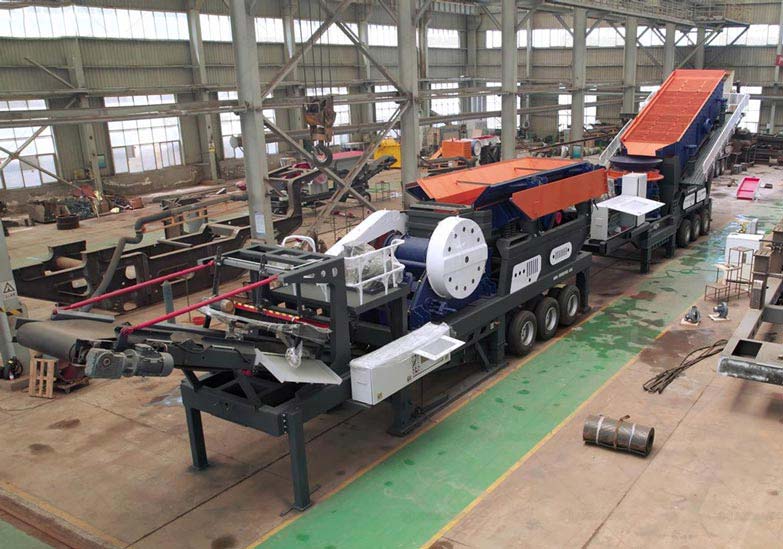
While mobile crushers are inherently faster to deploy than fixed plants, their full potential is often hampered by on-site “stick-building.” Each project becomes a custom assembly job: the crusher unit arrives, but then crews must construct support platforms, build feed and discharge hoppers, erect conveyor supports, and wire control rooms from scratch. This process is vulnerable to weather delays, skilled labor shortages, and design inconsistencies, turning what should be a swift deployment into weeks of unpredictable on-site work. The promise of rapid mobility is lost in a slow commissioning phase.
Defining Modularity in Mobile Crushing
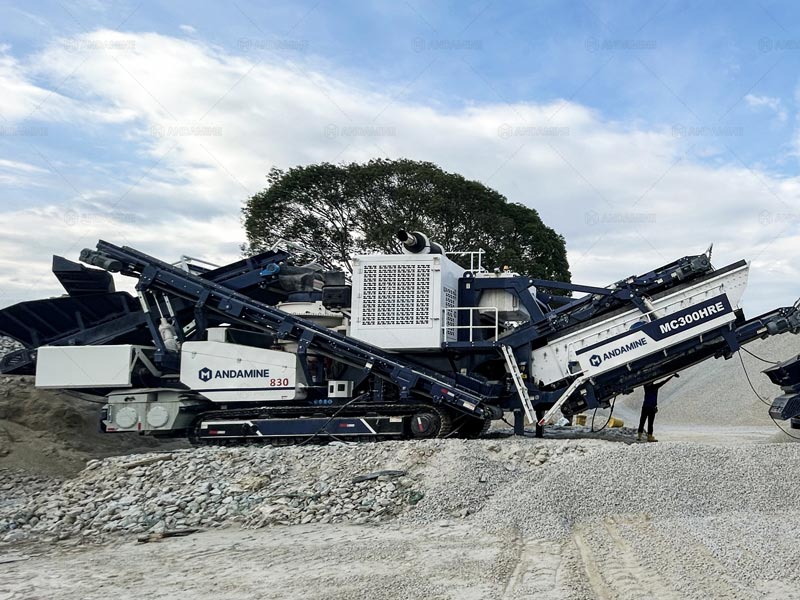
Modular design reimagines a complete aggregate crusher plant(planta trituradora de agregados) as a set of pre-fabricated, skid- or trailer-mounted sections. Instead of individual components, entire functional units are delivered. Key modules include the primary portable stone crusher module with integrated feeder, a separate screening and classifying module, a series of plug-in conveyor modules, and a fully equipped electrical and control room module. Each is factory-built, pre-wired, and pre-tested as a complete subsystem.
Key Mechanisms for Accelerated Commissioning
The speed benefit of modularity is not incidental; it is engineered into every phase of the project.
1. Parallel Processing: From Sequential to Concurrent Workflows
The greatest time-saver is the decoupling of activities. While site preparation (grading, foundation pads) is underway, the modular crushing and screening units are being fabricated and tested at the factory. This parallel processing eliminates the dead time inherent in the traditional sequential model of “deliver, then build.” By the time modules ship, the site is ready for rapid placement.
2. Plug-and-Play Integration and Reduced On-Side Labor
On-site, the assembly process shifts from construction to connection. Modules are designed with standardized interfaces—flanged conveyor connections, quick-connect electrical couplings, and pre-aligned mounting points. A concrete crusher(trituradora de hormigón) module for urban recycling projects, for instance, can be linked to a screening module in a matter of hours rather than days. This drastically reduces the need for specialized welders, electricians, and fabricators on-site, a significant advantage in regions with skilled labor constraints.
3. Factory-Controlled Quality and Pre-Commissioning
Complex system testing is performed under controlled factory conditions. Hydraulic systems are cycled, electrical panels are energized, and control logic is simulated before shipment. This “pre-commissioning” ensures that when modules arrive, they are proven functional units. The risk of discovering a major fabrication error or wiring fault in a remote location—a project manager’s nightmare—is virtually eliminated, smoothing the path to first aggregate production.
Regional Advantages for Latin American Projects
The modular approach solves several region-specific challenges.
Navigating Logistical and Geographic Complexity
Latin America’s terrain varies from mountainous mining regions to dense urban centers. Modular units, designed for road transport, break a large plant into manageable shipments. This simplifies permitting and transport logistics compared to moving oversized, partially assembled components. For a copper mine in Peru needing a dedicated mineral crusher(trituradora mineria) for oversize material, a modular solution allows deployment directly at the mine pit or coarse ore stockpile with minimal disruption to existing infrastructure.
Enhanced Flexibility for Varied Applications
The region’s project mix is diverse. A contractor may need a concrete crusher for a São Paulo high-rise demolition this year and a portable stone crusher for a highway project in Colombia the next. Modular plants can be reconfigured. The core crusher module can be paired with different screening or washing modules, protecting the capital investment and allowing one capital equipment purchase to serve multiple contract types over its lifetime.
Improved Safety and Reduced Site Footprint
By moving the majority of fabrication work away from the active project site—with its inherent risks of working at height, hot work, and heavy lifting—the modular strategy enhances overall job site safety. Furthermore, the compact, pre-planned layout of a modular plant often results in a smaller operational footprint, a crucial benefit for environmentally sensitive areas or tight urban infill projects.
Economic Impact: Beyond Faster Startup
The financial benefits extend far beyond a quicker revenue stream. Predictable commissioning timelines enable precise project scheduling and reduce financing costs for equipment sitting idle. Lower on-site labor requirements directly cut variable costs. Most importantly, the reduced risk of delay-related penalties and the ability to bid on projects with tighter schedules provide a formidable competitive edge for contractors and mining companies alike.
Conclusion: Redefining Project Agility
For Latin America’s fast-paced resource and construction sectors, modular structures are revolutionizing mobile crushing project execution. By transforming on-site construction into efficient module integration, this approach slashes commissioning cycles from weeks to days. It delivers not just a portable stone crusher, but a pre-assembled, high-performance production system ready to operate. In a market where time-to-production is directly linked to profitability, modularity is no longer just an option; it is the new standard for agile and successful project deployment.